Who needs Science Fiction when we have Science Fact? Part II
Here’s a few more examples of future tech becoming old hat. Click here to read Part 1.
Virtual Reality
I was never a Trekkie, but I caught a few episodes here and there. And what really caught my mind’s eye, was not the warp drive capable of hurling the Enterprise to the unimaginable corners of space-time, nor the weird alien lizard people, but the Holodeck. The Holodeck was the ultimate simulator – completely realistic with an infinite capacity. If you could put it into words the Holodeck could materialise it, whether that’s hanging out in a sleazy jazz bar or tommy-gunning Borg assassins.
Scientists have been in pursuit of Virtual Reality since the 60’s, and while countless headsets, omni-directional treadmills and advanced real-time motion trackers have come and gone, they have never been practical for the average gamer. Enter stage right: Oculus Rift.
 Recently purchased by Facebook for a whooping $2 billion dollars, who believe the Oculus “has the potential to be the next important […] computing platform[s]”, the Oculus is a virtual reality head-mounted HD display. It allows people to step inside the virtual world – whether that is a game like Minecraft, a combat training session or exposure therapy for those suffering with PTSD. The tilt sensors let you to control your viewpoint with head movements, and with the new developer kit they hope to combat any motion sickness that comes with the territory. When potentially coupled with this home motion capture suit that records your own movements and headphones that can make sound come from any specific direction – you could be in a virtual world tommy-gunning the Borg in your own living room for around £300.
Lasers
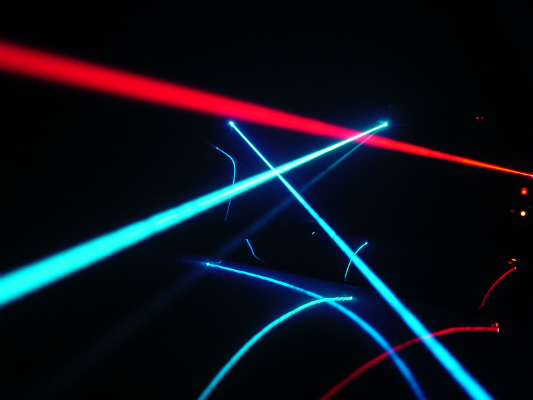
 Whether its lightsabers or sharks firing laser beams out of their heads, lasers have been the go-to slug of choice for space pioneers and evil aliens alike since H.G Well’s 1898 War of the Worlds. What is clear though is that if we want to survive the intergalactic civil war after we make first contact then our feeble gunpowder weapons just are going to cut the space mustard. As if in preparation, we’ve been making films about war in space for years, but finally it seems we are making war based on films.
This video here shows the American Navy vessel USS Ponce (I guess nobody told them) test firing the $30 million prototype Laser Weapon System (LaWS) on an unmanned drone somewhere in the Persian Gulf. Unfortunately there’s no *pew pews* with this system – more an invisible beam of concentrated light energy. If you’ve ever used a magnifying glass on a hot day to light a fire (or terrorise bugs) you should have an idea of how the system works. Just imagine the same thing but on are larger scale, and replace bugs with missiles and enemy drones (or space arachnids).
The laser can burn through the hulls and ignite the fuel tanks of aircraft and is supposedly devastatingly accurate; all directed by a “video game-like controller” to make sure war is just that little bit more like Space Invaders. The main advantage of the laser is that it can fire forever as long as it still has a power source, and each shot costs only $1. I would never usually glorify weaponry in such a way, but this is just to Star Wars not to mention. I for one reject all future alien overlords and am glad we are shaping up to be more than a mere blip on their road to galactic conquest. There are a dozen of non-lethal uses for lasers and particle beams, such as cutting diamonds, powering small aircraft, destroying tumours and finding the Higg’s boson.
Suspended Animation
Waking from their hypersleep, the crew of the USCSS Nostromo emerge from their biopods refreshed and rejuvenated; ripe and ready to host alien babies. Suspended animation allows interstellar passengers to survive hundreds of light years of travel in a blink of an eye. Incurable illnesses could be beaten by cryogenically freezing yourself until the year 3000.
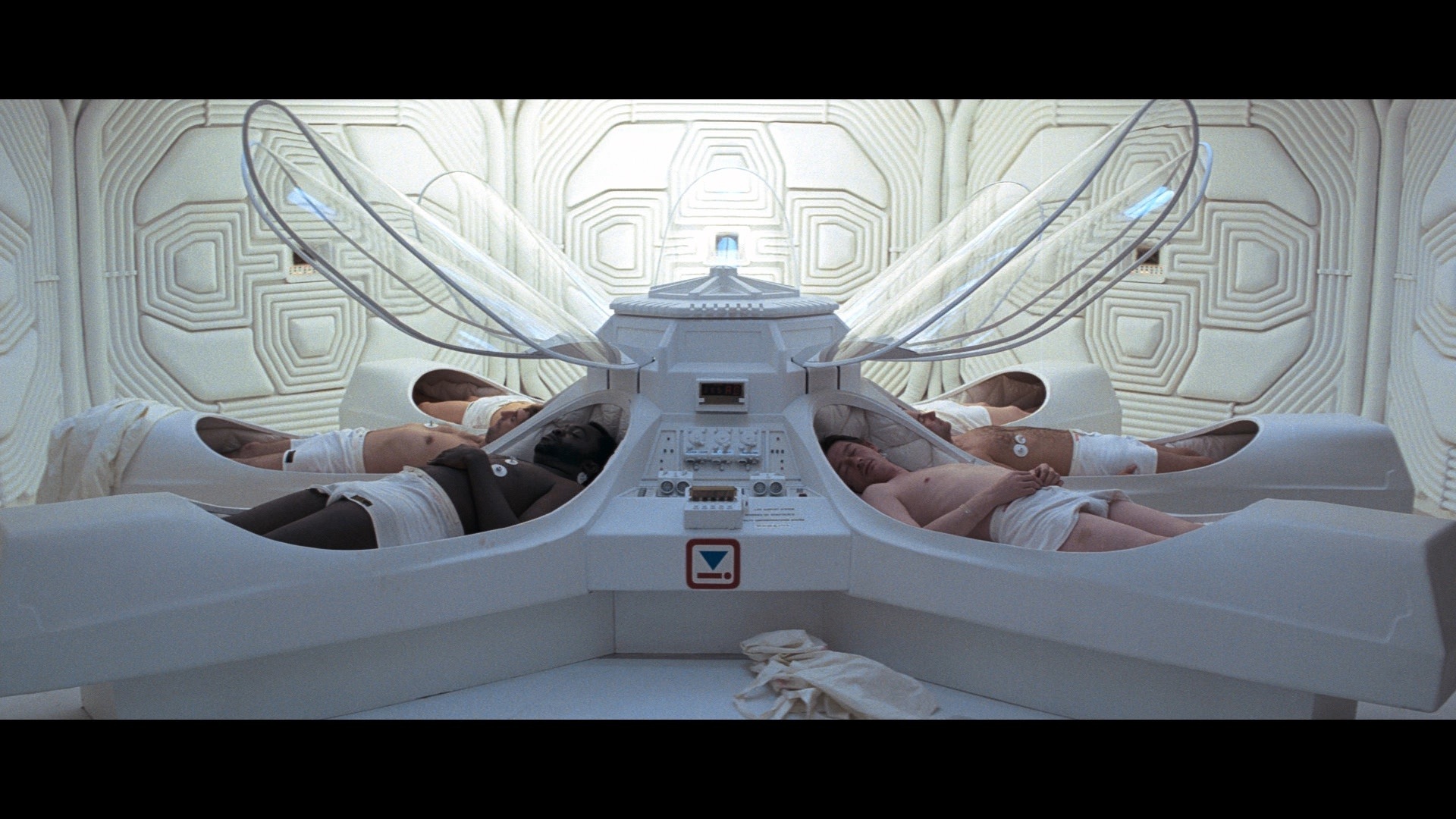 More science fiction nonsense and conjecture, I know, but this seriously does exist on a smaller scale. In the last couple of months, doctors in University of Pittsburgh Medical Centre have set in place a controversial human medical trial which involves draining patients of their blood and replacing it with a saline solution, rendering them clinically dead. Sounds counterproductive, I know, but this radical treatment could save the lives of people who’ve undergone serious trauma or in cardiac arrest.
By cooling down the body with a procedure called therapeutic hypothermia, cells need less oxygen as the chemical reactions in them slow down, which in turn slows down the body’s natural processes to crawl, meaning that a gunshot wound that may kill the patient in 5 minutes will now take 45 – giving the surgeons vital time to prepare before operating. There are some worries though – when tested on animals, pigs that had been dead for hours were revived with seemingly no damage to their mental capacity, but what effects it will have on our superior brains is unclear. However, 90% survived potentially fatal injuries. The controversy in the trial comes from moral dilemma that most people who need this treatment are unable to give their consent, but, as long as they don’t wake up in the year 3000 they should be okay with it.

To find out more about fun cutting edge technology and to get involved in one of world’s most creative communities check out MakerClub.org and sign up to find out about our IndieGoGo campaign launching later this October.
Share with your friends



Leave a Reply