Who needs Science Fiction when we have Science Fact? Some High Tech Straight out of Sci-Fi
The future is nearly upon us.
Sounds like a pretty obvious statement, I know. But I’m not talking about any old future; I’m talking about The Future…
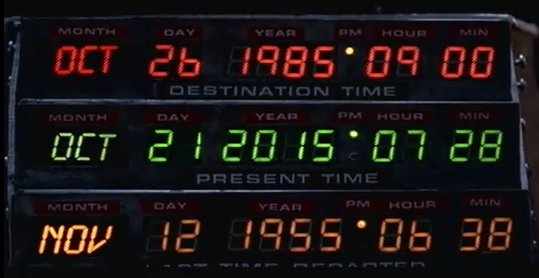
Only a year until we are officially in the distant future, guys, at least, according Back to the Future Part II. While we still aren’t really any closer to a time-travelling Delorean, and self-tying shoes are still on the horizon (2015), not a day go passed where I see a piece of modern high technology that doesn’t feel like its been beamed out of the Syfy channel.
But I know, I know what you’re shouting angrily at your screen right now – “where are our hover boards?!” I doubt we are going to see a extreme Hover boarding category in the X games in time for Marty McFly to sign up for when he arrives next October, but to dry your tears, here’s a few equally impressive pieces of technology that are making the leap from science-fiction to science… Err, non-fiction.
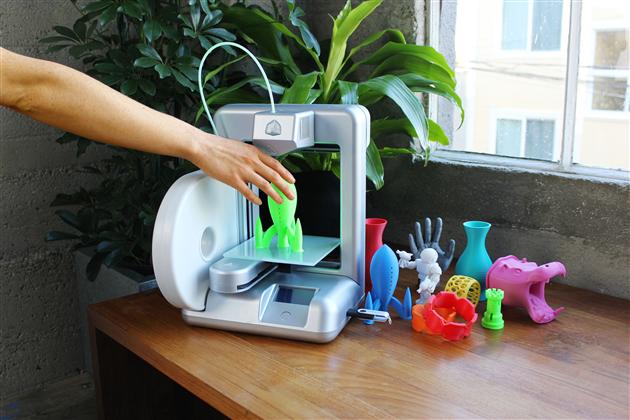
3D Printers
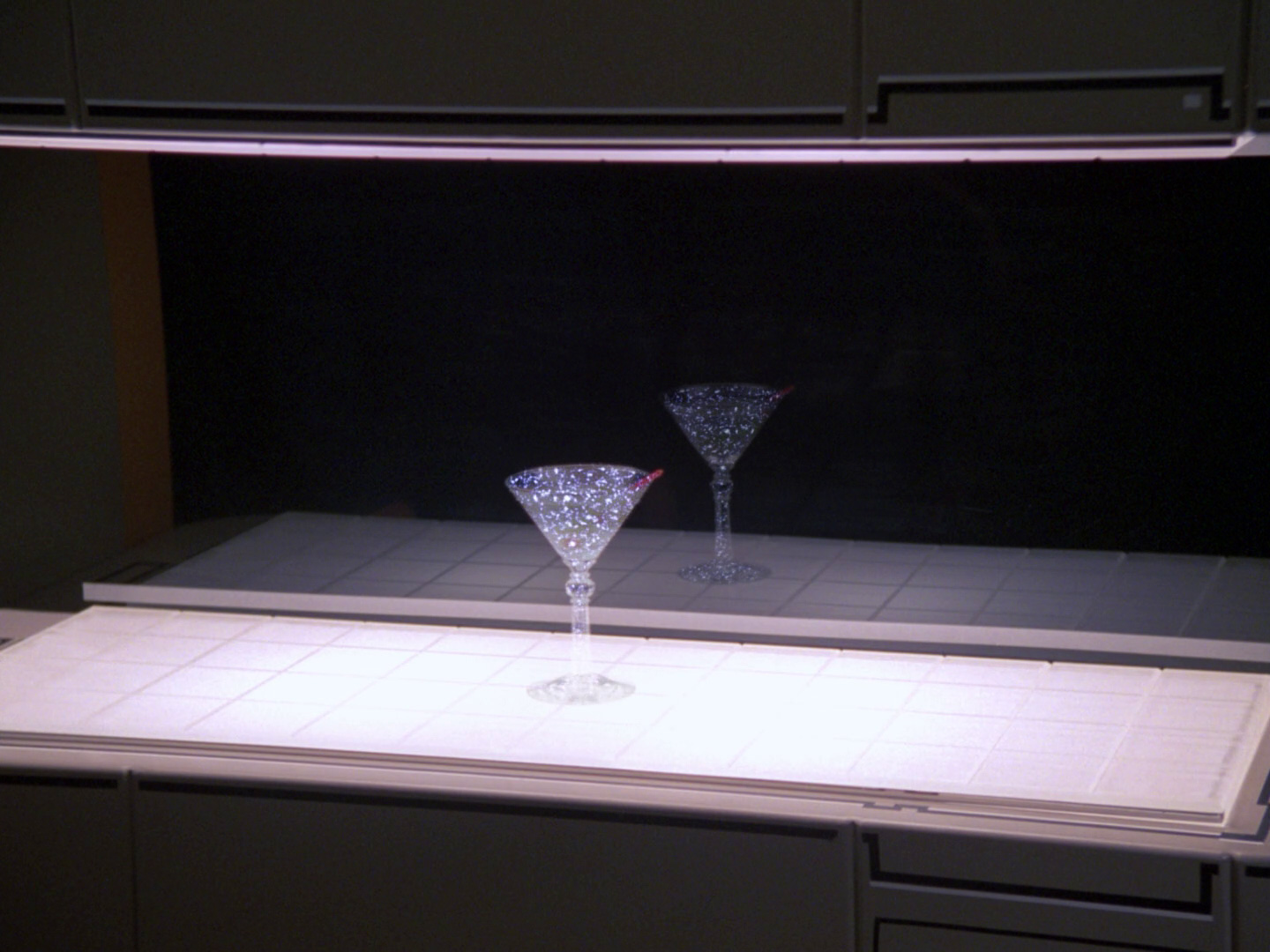 Imagine a world where you can walk up to a machine and ask for tomato soup, drop a “Make it so” and, voila, tomato soup materialises in front of your very eyes. Now imagine a world where you could do the same, but with a house. Now stop imagining, because you live in that world.
Okay, maybe we can’t print soup yet… Disappointed? Have a 3D printed cookie to cheer you up. Or would you rather design and print your own customised pasta shapes? What, it’s your birthday? No problem, I’ll print out your name in melted chocolate. Oh sorry, did that burn you? That’s okay; they’re working on a machine that can print new skin directly on to your body.
They may not be as shiny and immediate as the Star Trek replicators that surely influenced them, but 3D printers are poised to revolutionise our way of life. Just input a design and load up the machine with your material, whether it is plastic or cookie dough. Watch as it methodically plans out the design and implements it, applying layer by layer in the same way a traditional printer layers ink back and forth on a page. As they become exponentially more affordable, with more and more designs available online, 3D printers are bound to become as domestic as your fridge or your Roomba. There’ll be a day when your Roomba breaks, and instead ordering a new part that takes a week to ship, you can just download the CAD file online and print it off yourself for free. Suddenly, the internet is not just full of free information, but free objects too – which could totally revolutionise our relationship with industry and making.
Holographic Displays
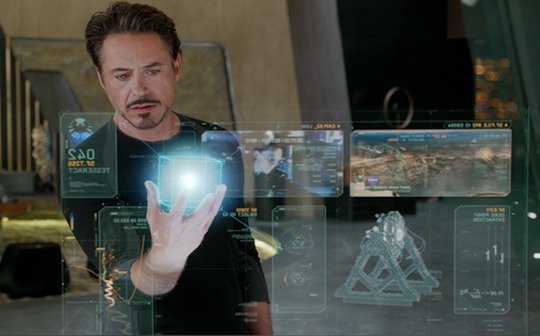
Floating, interactive holo-HUDs have been in our sci-fi flicks ever since Ben Kenobi was Princess Leia‘s Only Hope. Everyone remembers watching Tom Cruise in Minority Report sorting through mugshots with his magic black gloves. Gesture-based User Interfaces have already made it into our homes with the Xbox Kinect, but that part of the package is nothing without the interactive screen suspended magically midair. Visually, they are slick as oil on ice, and just the thought of being able to throw and crashed IE browser across the room in disgust is ‘tech’-tacular.
We’ve already seen holograms used in everything from crisp packet pogs to Tupac resurrected at Coachella, but they’ve yet to make it to our domestic devices. Until now.
Ostendo Technologies, a California-based company, are developing a chip would enable new smartphones to project three-dimensional holographic videos and images without the need for any clunky 3D glasses. So far it’s received over £72 million in funding and they are predicting it will be on the market by 2015 (Just in time, Marty).Ostendo‘s founder Hussein El-Ghoroury has high hopes for this technology, and predicts a day when a “pair of Prada glasses” could be “used to generate things like a 3D map to show you where you need to go as you can walk down Fifth Avenue”. Bundle in Netflix with these glasses and shut up and take my money.
Biometric Face Scanners
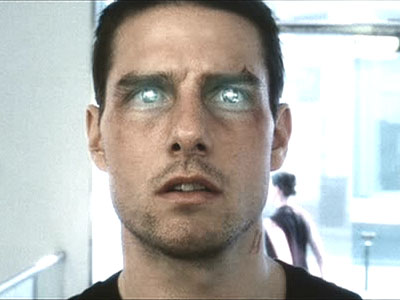
Back to Minority Report again for this one – biometric retina scanners that pick you out from the crowd, targeting ads specifically to you as you walk by, shouting your name out and asking you if you’re paying too much for your pet insurance. A stark portrayal of a dystopian future, or a self-fulfilling prophecy?
“Yes it’s like something out of Minority Report, but this could change the face of British retail and our plans are to expand the screens into as many supermarkets as possible”, said Simon Sugar, son of Lord Alan and chief exec of Amscreen. What he’s referring to are the plans to tailor ads to unsuspecting customers at Tesco petrol stations by using the OptimEyes facial scanning software to determine their age and gender and assess their demographic. This data is accessible (and respondable) in real-time, presumably by a boardroom of ad-men cackling maniacally at infographics. Of course this immediately raises privacy concerns, as customers can hardly opt out of buying petrol, but reportedly no images are recorded and the software is not designed to recognise individual faces.
To find out more about fun cutting edge technology and to get involved in one of world’s most creative communities check out MakerClub.org and sign up to find out about our IndieGoGo campaign launching later this October.
Share with your friends



Leave a Reply